A tree trunk full of history
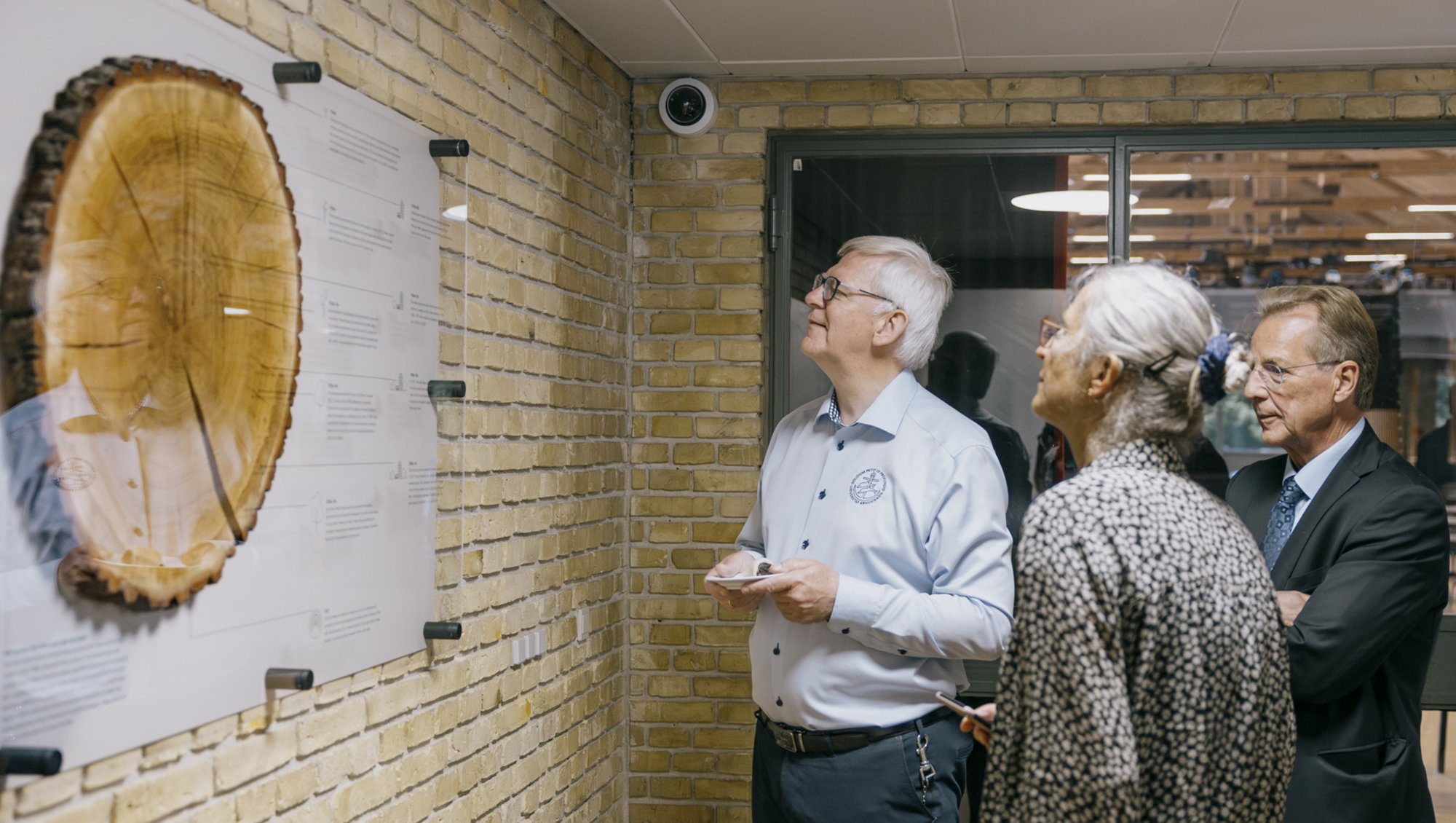
For decades, the oak trees in the University Park have stood as silent witnesses to a series of major events – from Regattas and royal visits to a world war and climate change. In 2020, one of these trees was felled to make way for the campus expansion. Now, a slice of that tree’s trunk is getting a new lease of life as part of an exhibition highlighting the history of Aarhus University through nature’s lens.

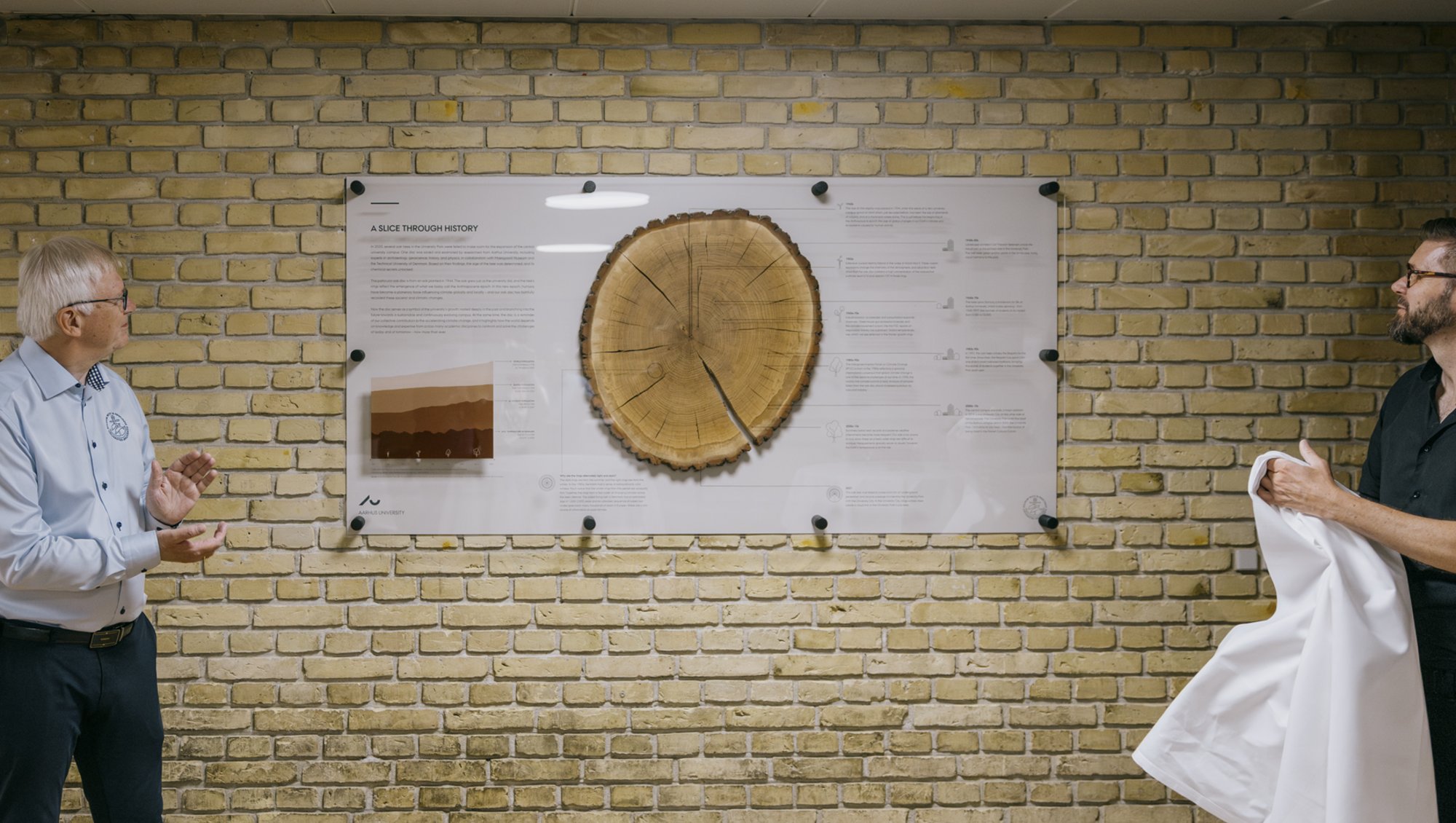
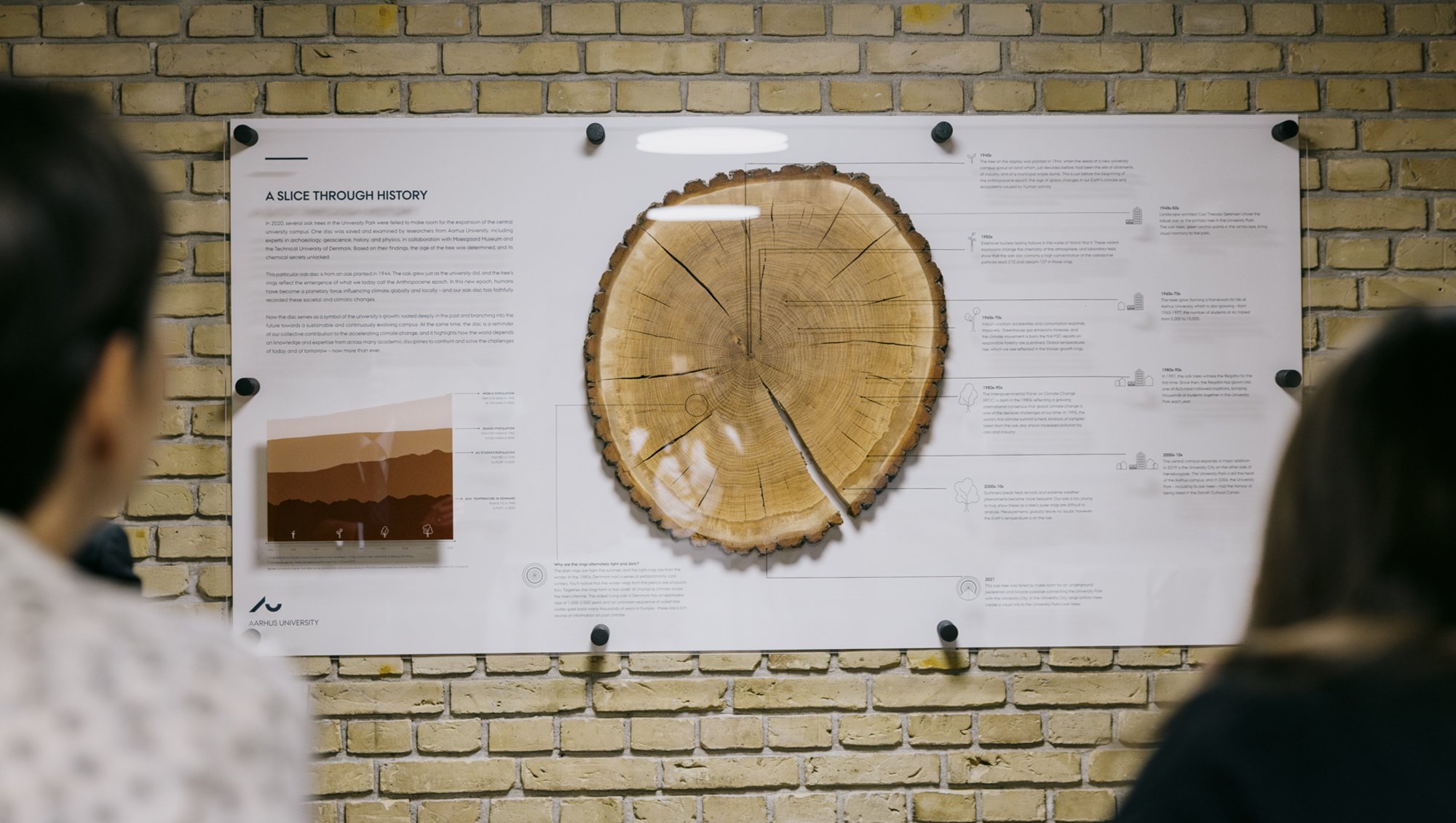
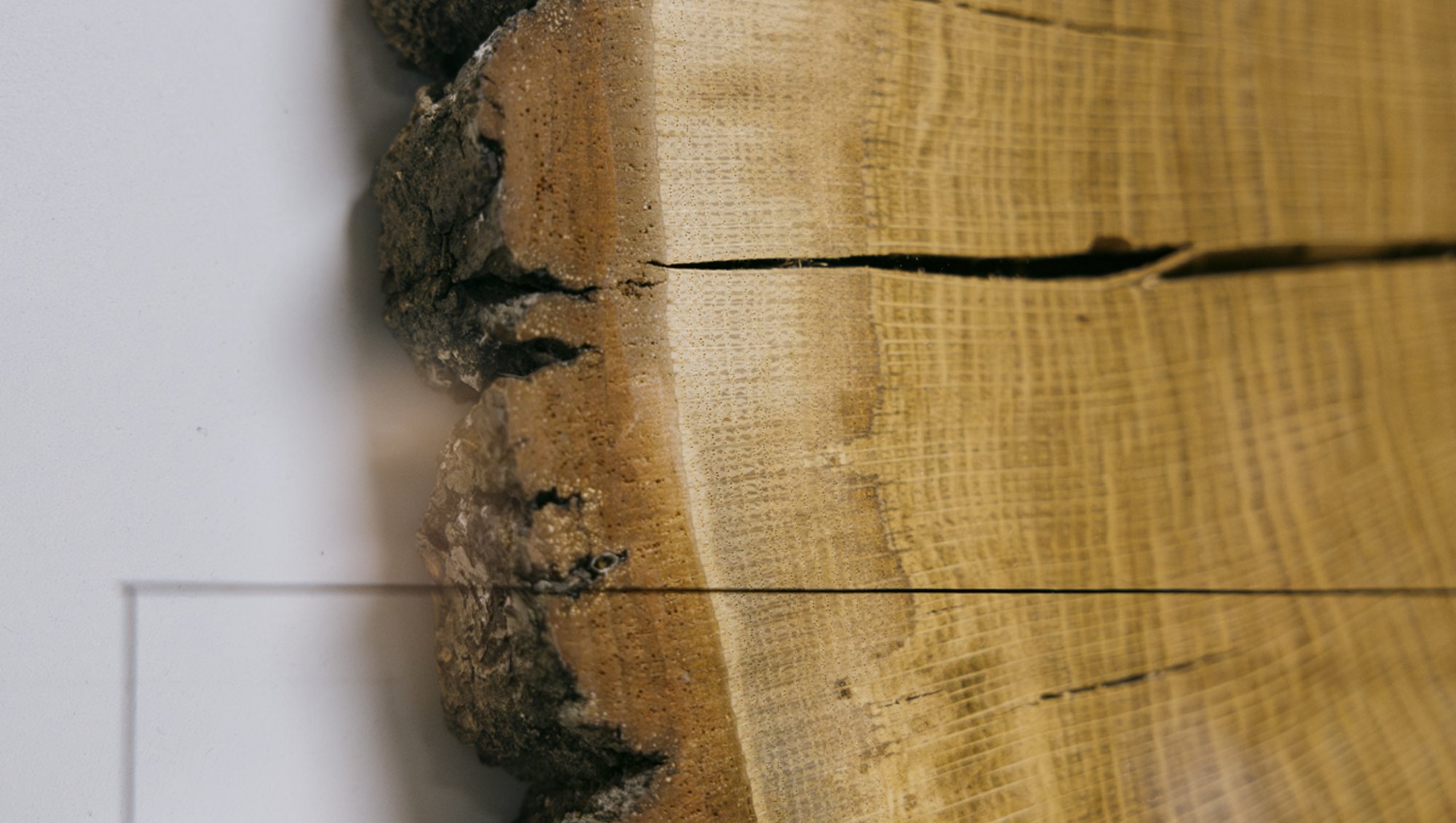
Next time you visit Stakladen, you’ll encounter new exhibition featuring a large, solid oak wood slice. On the surface of the wood slice, growth rings tell the story of a life that began well before most of the park’s buildings were even thought of. Each ring represents one year of growth; some even show traces of specific historical events, such as the nuclear tests of the 1950s, while others record the steady rise in global temperatures.
The exhibition also links the tree’s history to events outside natural world : some of the growth rings witnessed important events in the history of Aarhus University. This includes the construction of the new University City and landmark events such as the first Regatta. In this way, the exhibition interweaves the tree’s history with our history, local and global – and invites us to reframe the university’s development in direct dialogue with the natural world around us.

A barcode for thousands of years of history
Professor of archaeology Felix Riede is behind the new exhibition. When he heard that some of the trees in the University Park had to be felled, he rushed to salvage a slice of one of their trunks. He worked alongside researchers from archaeology, geoscience, history and physics to examine the slice. Together, they determined the oak tree’s age and began to uncover its secrets.
“Trees and their growth rings are some of the very best sources of information on environmental changes throughout history. Oak is particularly useful since it forms nice, distinct rings of varying thickness each year. The rings create a unique ‘barcode’ based on the growing conditions a tree experienced during its life. In Europe, we have been able to piece together a sequence of overlapping oak growth rings dating back thousands of years. Timber from ships and buildings, ancient fences and signposts, and bog oak and tree stumps from long-flooded landscapes have all contributed to this millennia-spanning ‘barcode’. Our lovely oak from the park is now part of this sequence and will have a dignified afterlife here in the heart of AU,” says Felix Riede.
Rector Brian Bech Nielsen is delighted that the oak tree will live on as part of the university and will provide students, staff and visitors with a new perspective on history:
“The growth rings are not just a beautiful pattern, they are a source of reflection: on the climate, on the university’s development and on our place in a story that continues to grow around us each day. For some, the exhibition may bring back memories of their own experiences in the University Park – of strolling along the winding paths or studying in the dappled light beneath the trees,” says Brian Bech Nielsen.
Facts about the oak wood slice
- The Aarhus University Research Foundation provided funding for the work involved in turning the slice of wood into an exhibition.
- Researchers from a range of disciplines were involved in the analysis of the slice: Professor Ning de Coninck-Smith (DPU); Professor Marit-Solveig Seidenkrantz and Associate Professor Thomas Ulrich (Geoscience); Associate Professor Jesper Olsen (Physics), as well as collaborators Jonas Ogdal (Moesgaard – dendrochronology) and Professor Jixin Qiao (DTU).
- The proposal to combine dendrochronology, history and climate change was one of the winning ideas in a competition organised by AU’s climate initiative.