Safety Adviser function
It is a statutory requirement that institutions that are involved in transporting dangerous goods, including transporting chemicals, hazardous and radioactive waste, transporting chemicals by carrier or driving with chemicals in AU’s vehicles, must appoint one or more safety advisers.
The organization
Aarhus University has one safety advisor.
Appointing safety advisers and carrying out assignments is done in accordance with the Executive Order on the Road Transport of Dangerous Goods.
he safety adviser is trained with the Danish Emergency Management Agency as the examination authority.
Training of staff
The Safety Advisor offers various forms of dangerous goods courses, you can find the courses in the right column on this page.
IATA packing course
IATA packing course
In order to packaging, pack and ship biological samples, genetically modified organisms and dry ice outside Denmark, the employee must attend an IATA course and thereby have a valid IATA certificate.
AU Safety Advisor offers a free IATA course for AU employees in the above, the course is approved by the Danish Transport Authority.
For more information - visit this page: IATA Package Course
1.3 Education - Hazardous waste
1.3 Education - Hazardous waste
If hazardous waste is handled at an Department, a minimum of 1 staff must be appointed as waste responsible, this employee must have a 1.3 education in hazardous waste before the work can begin.
At the end of the course, the participant is able to:
- Handle and sort hazardous waste.
- Safely handle chemicals and biological agents.
- Pack and packaging hazardous waste for shipping.
- Marking and labeling packages for shipping hazardous waste.
- Fill out transport documents for shipping hazardous waste to NG Nordic, Marius Pedersen or other recipients.
At the end of the course, the waste responsible receives a certificate of education that is valid for a 3-year period.
AU's safety adviser is responsible for the 1.3 programme and offers it free of charge and as a 1-day course, the course consists of theory and assignments. The course is adapted to the waste responsible task.
If the training is only to apply to clinical risk waste, then it is a 1-2 hour course.
An update course is also offered - 2-4 hours course, depending on the task.
If there is a need for 1.3 training of new waste responsible or updating of waste responsible, contact AU's safety advisor [email protected] and a date for the course will be agreed upon.
1.3 Eduaction - Dangerous goods in vehicle
1.3 Eduaction - Dangerous goods in vehicle
If dangerous goods are transported in vehicles at a Department, contact AU's safety advisor, who handles the 1.3 program, and offers it free of charge, as a 2-hour course, the course consists of theory and assignments.
Here are examples of dangerous goods transport:
- Fieldwork,
- Delivering/collecting samples at the hospital,
- Pick up dangerous goods from a supplier (gas cylinder, pesticide),
- Drop off dangerous goods at a recycling center or
- Transporting dangerous goods between the Departments addresses.
At the end of the course, the participant is able to:
- Identify dangerous goods.
- Identify different exceptions, example 1.1.3.1.c.- the contractor rule.
- Pack and packaging dangerous goods before shipping.
- Marking and labeling packages for shipping dangerous goods.
- Calculate points according to small load exemption .1.3.6.
- Prepare the shippers declaration according to small load exemption1.1.3.6.
At the end of the course, the waste responsible receives a certificate of education that is valid for a 3-year period.
If there is a need for 1.3 training of staff, contact AU's safety advisor [email protected] and a date for the course will be agreed upon.
1.3 Education - Moving
1.3 Education - Moving
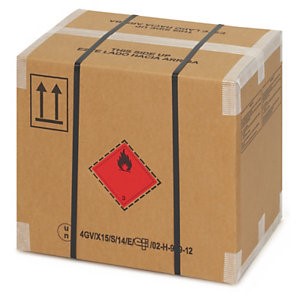
Departments that are moving to a new address must appoint a relocation coordinator who will contact the safety advisor, who offers a quick guide and training, see more about rules for relocation here.
The training has a duration of 2 hours and consists of theory and assignments.
At the end of the course, the participant is able to:
- Identify dangerous goods.
- Identify different exceptions - Excepted quantities and Limited quantities.
- Pack and packaging dangerous goods before moving.
- Marking and labeling packages with dangerous goods.
- Request the shippers declaration for full regulated dangerous goods.
At the end of the course, the participant receives a certificate of education that is valid for a 3-year period.
If there is a need for 1.3 training of staff, contact AU's safety advisor [email protected] and a date for the course will be agreed upon.
Moving without a vehicle:
f the move can be made as a pedestrian, with chemicals in a tow truck or similar - the dangerous goods rules do not apply.
Pack the chemicals with care in other containers (fiberboard or plastic boxes) with absorbent packaging material (vermiculite).

Education
- Safety consultant ADR (road).
- Packaging, packing and labelling of dangerous goods via shipping IMDG.
- Packaging, packing and labelling of dangerous goods via aviation IATA.
- IATA category 7.3.
Mail: [email protected]